GST (Goods & Services Tax) –
The idea that there should be a single tax system in a country led to the emergence of the GST. Value-added tax (VAT) system was there before goods & services tax. In the VAT system, there were different types of taxes and different rates in different states.
The central and state governments jointly amended the constitution .following which the GST system was implemented across the country from July 2017.
What is GST?
GST is a tax that has made indirect taxes uniform across the country. It is an indirect tax that we pay when we buy goods and services. VAT,Excise duty, etc. many types of taxes are now included in GST.
GST is an indirect tax. This means that everyone has to pay the same amount of tax. This tax is not levied according to how much money a person earns. Instead the rates of GST changes depends on what type of goods you buy. the income tax is completely opposite . Income tax rate increases or decreases according to your annual income. Income tax is a direct tax .
Let us understand from the example of ‘GST’ –
When we buy goods or get a service like doctor’s treatment, water filter repair, etc. All these are goods and services. On their purchase we pay ‘Goods and Services Tax’ i.e. ‘GST’. This tax is already added to the price of the goods.
- For example.
- If a soap costs Rs 30, then GST is already included in that Rs.30. we do not need to pay a separate tax.
- When you visit/consult a doctor and the doctor charges you Rs.500 for her services, this means these Rs.500 include GST.
The government does not collect GST directly from you. Instead, the government collects GST from the trader. We have already paid GST on the goods we buy from the trader. Then the trader deducts his profit and pays the decided GST to the government. And that is why it is indirect tax .
GST Rates ?
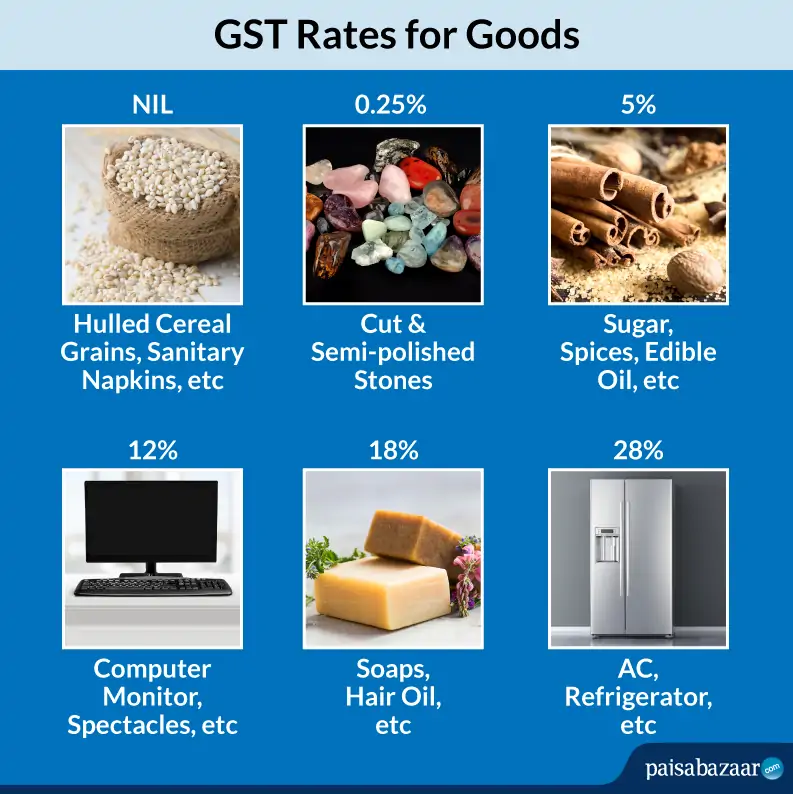
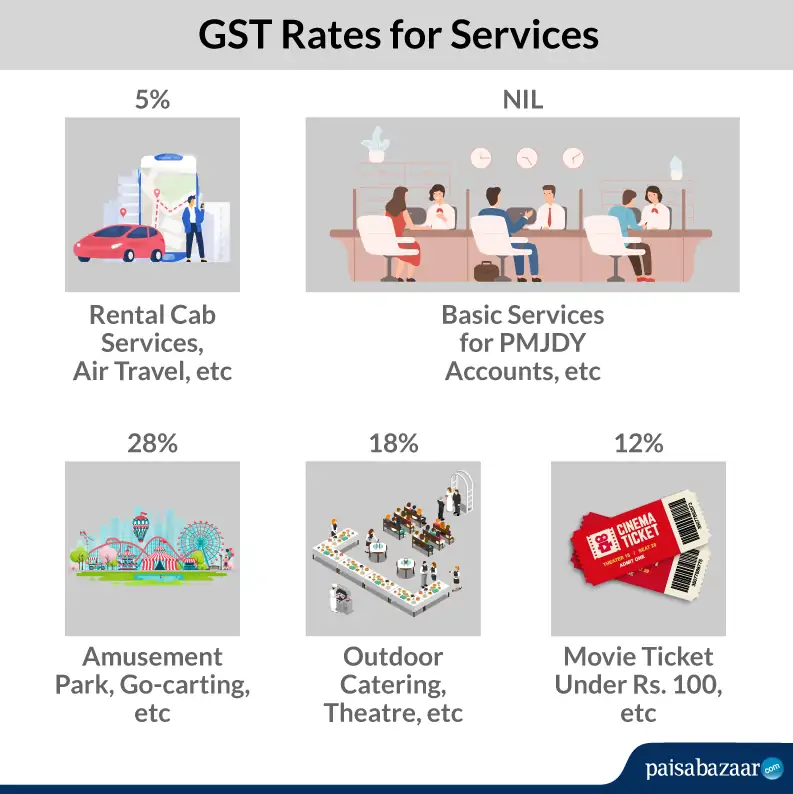
GST Council decides which type of goods will attract what percentage of GST. The council also decides the GST rate slabs. The chairman of GST Council is the Union Finance Minister. The council consists of Finance Minister/other ministers from each state government. GST will be levied on the goods according to the type of goods. Higher GST on AC, cars, cinema tickets, etc. Lower GST for basic goods and services.
GST System : slabs & rates
There are four main slabs of GST rates in India. ‘slabs’ are the group of percentages according to which GST is levied.
There are four main slabs in the GST sysyem i.e. percentage groups like 5%, 12%, 18%, 28%. These percentages are not absolutely fixed. There are exceptions to these four slabs.
Eg -. 3% GST is charged on purchasing gold or silver (August, 2025). etc.
GST rate slabs and GST rates are subject to change. Therefore, you should check the GST rates on the official website of the government from time to time. Official website: 1. https://cbic-gst.gov.in/hindi/gst-goods-services-rates.html
Types of GST : GST is Divided into these 4 parts
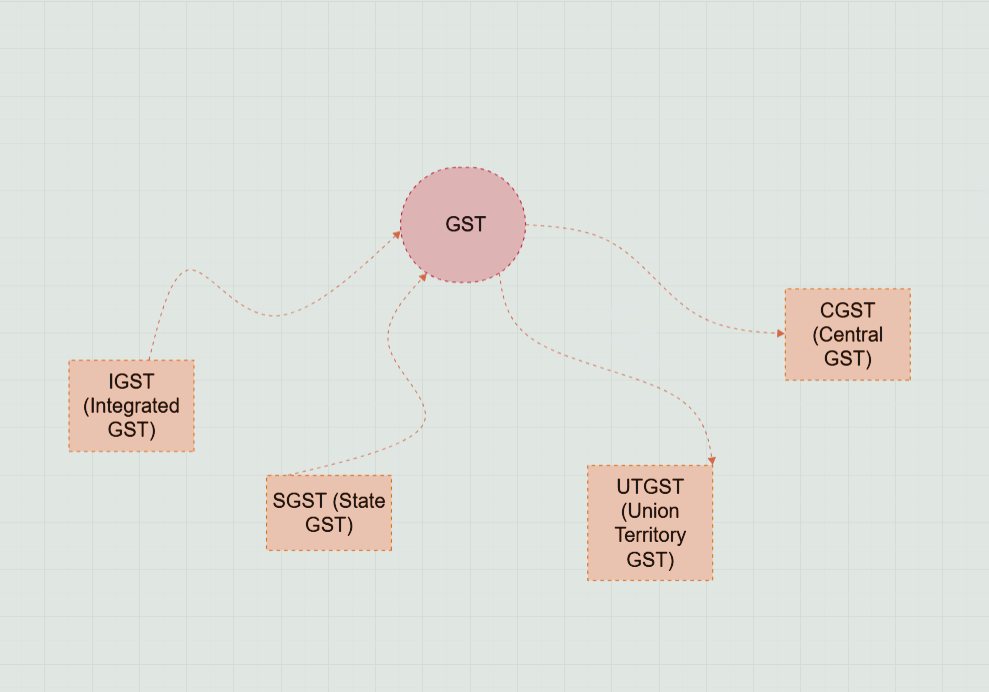
- Central Goods and Services Tax (CGST)
- Central Government collects CGST.
- State Goods and Services Tax (SGST) –
- state government collects the SGST.
- Integrated Goods and Services Tax (IGST) –
- at first Central Government collects IGST and half of the IGST is refunded to the State Government by the Central Government.
- Union Territory Goods and Services Tax (UTGST) –
- Union Territory collects the UTGST. That is, UTGST goes to the account of the Central Government.
We have briefly learned about the GST system and indirect tax system in our country. This topic is vast. So “ GST part 2 ” will be there soon…
follow us on
Join our WhatsApp channel for updates on new posts.