
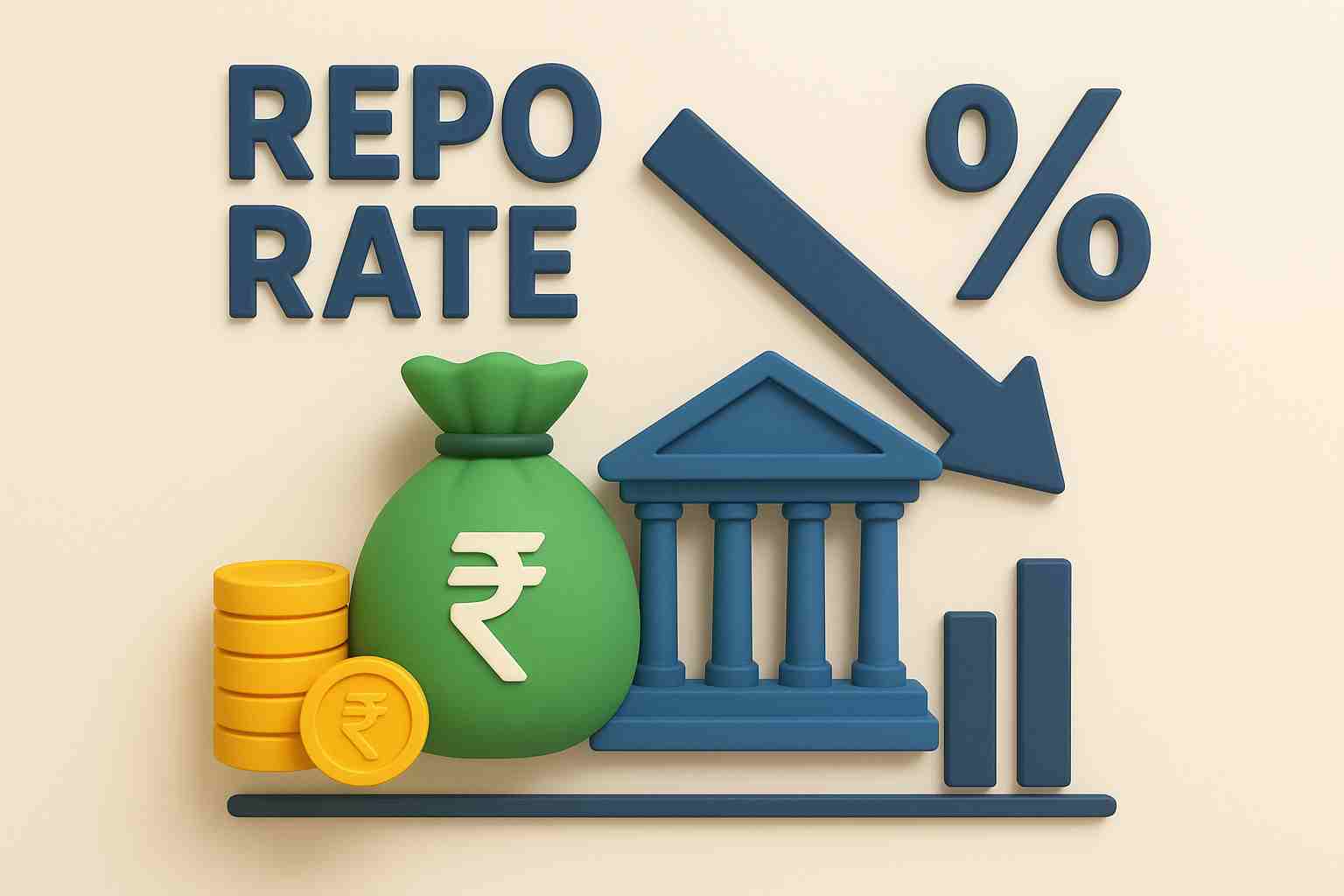
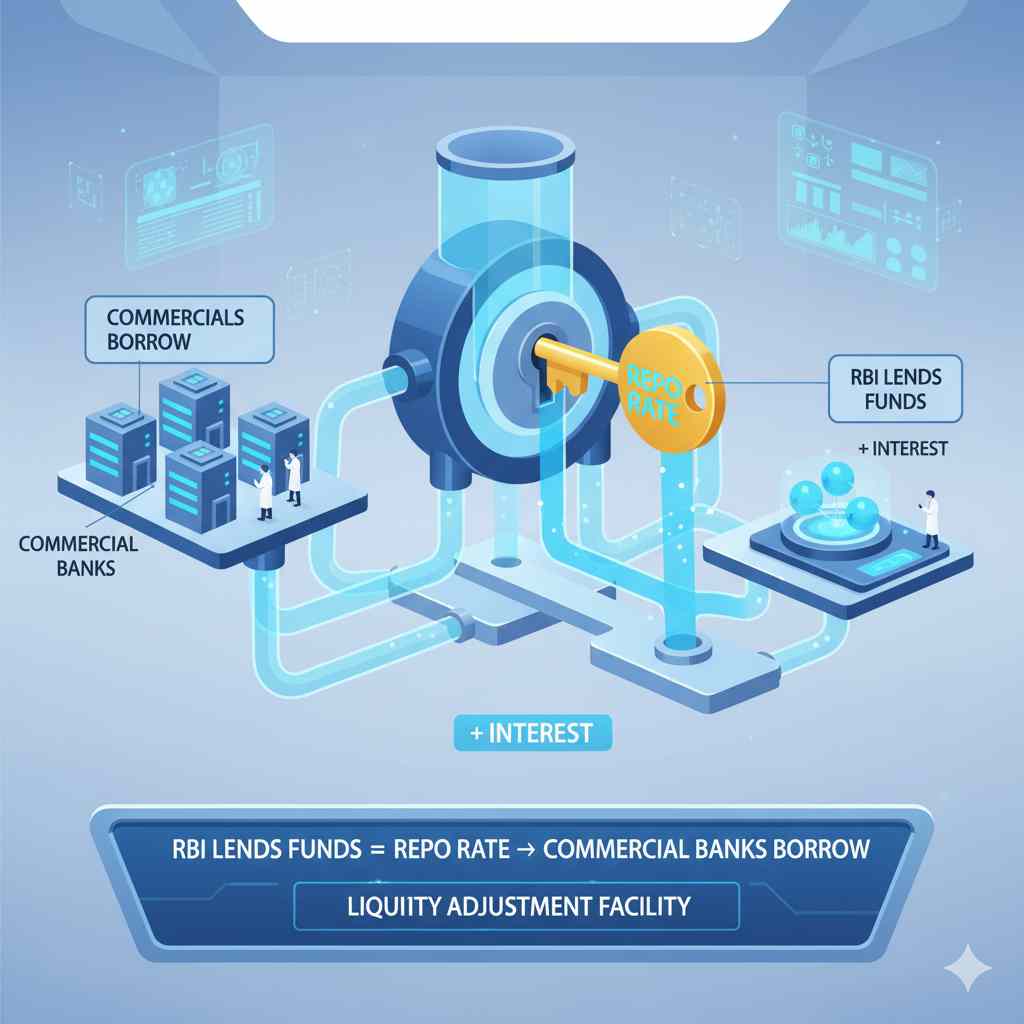
The Repo Rate/Repurchase rate is the benchmark ‘interest rate’ of the RBI at which the commercial banks borrow money from the RBI. It is a short term borrowing, meaning the banks borrow for a time period of less than a year.
Why do banks borrow ? 🤔
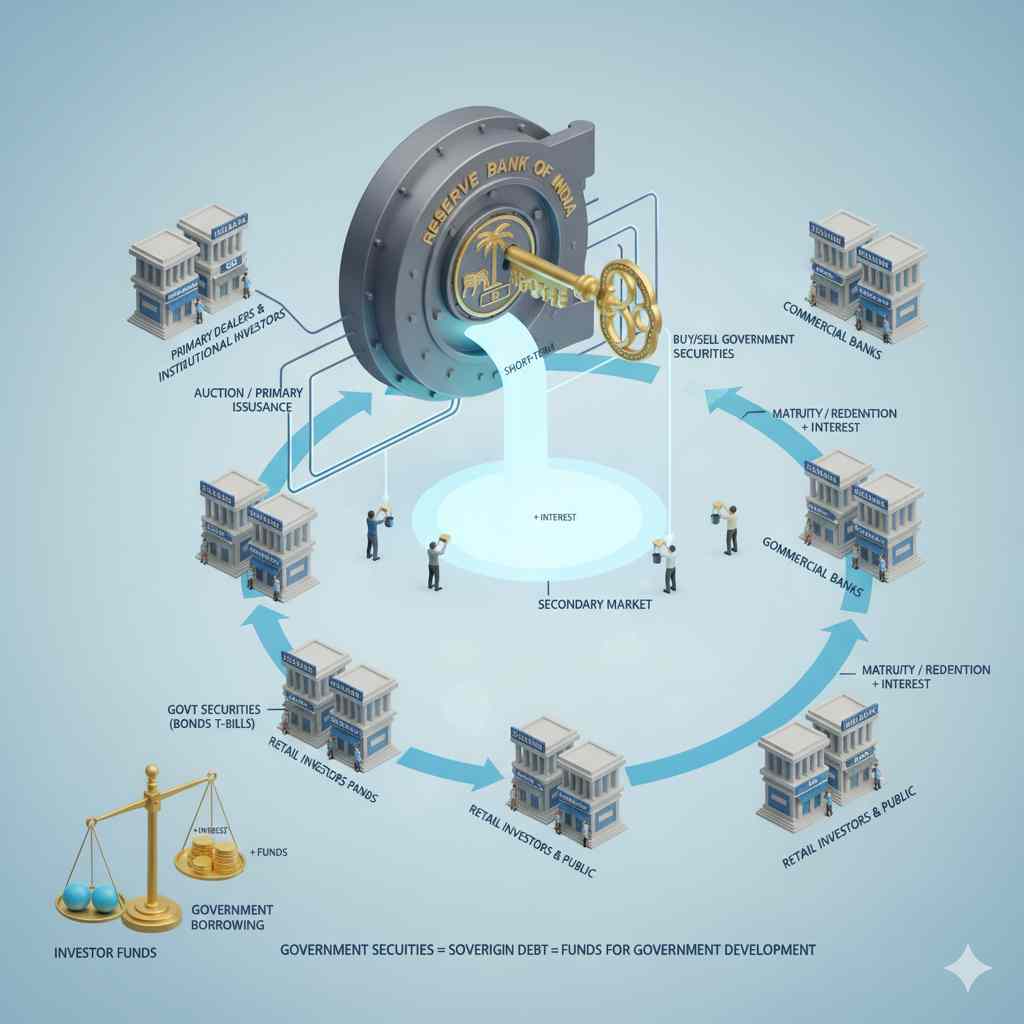
Why do banks borrow from the central bank 🏦? > To address the shortage of funds, the commercial banks borrow money from the RBI. The banks borrow money, but what do they mortgage? The commercial banks mortgage the Government securities(G-sec) to the RBI. The G-Secs are the debt instruments of the government, and the government circulates them when the Govt. needs money. The Govt-secs are managed by the RBI, as the RBI is the banker to the Govt. of. India.
What ‘Repo’ Actually means ? 💰
Repurchase agreement – The term “repo” means “repurchase agreement,” where the bank agrees to buy back the Govt-securities from the central bank/RBI at a particular date at a pre-determined price, which includes the ‘repo rate’ as the interest. So, it is a circulation of money and Govt-secs in the financial system of the country.
When a commercial bank has excess funds, then it buys the Govt-sec and lends money to the Govt. The Govt-sec are then repurchased by the RBI on behalf of the Govt. and a fixed interest is paid to the bank. In this cycle, the ‘Repo’ plays the key role. Repo rate is the most important number in this overall circulation of money and Govt-secs.
Repo rate change and its implications 👇
| Repo rate change | Bank’s Interest rates on loans (floating interest rates) |
| 1. Repo rate is increased | 1. The interest rates will increase, > the loans will get expensive 😱 |
| 2. Repo rate is decreased | 2. The interest rates will decrease, > the loans will get cheaper 😁 |
| 3. No change in Repo rate | 3. Usually there will be no change in the interest rates, but a few banks may increase or decrease their interest rates individually. 🤔 |
The RBI lends money to the banks in need and charges the banks a particular interest rate, i.e., Repo rate. When banks return the borrowed money to the RBI, they pay that interest. When the RBI increases the Repo rate, the loan becomes expensive for the commercial banks as the banks need to pay more interest on the loan taken from the RBI. And that’s why the loans given by the banks to their customers also become expensive because the banks follow the RBI and increase their interest rates on loans.
The reverse happens when the RBI decreases the Repo rate. Banks get loans from the RBI at lower rates and in the same way we get loans from our bank at a lower rate (if we choose a floating interest rate).
The interest rate on our savings account deposits are not affected much. The interest rates on new Fixed Deposits are affected largely by the Repo rate change. An increase in repo rate leads banks to increase FD rates to attract funds, while a decrease in repo rate encourages banks to decrease FD rates to align with cheaper borrowing costs and maintain profit margins. Existing FDs are unaffected, as their rates are fixed for the tenure of the deposit.
Who decides the repurchase rate ?
The RBI decides the Repo rate. Usually every two months, RBI declares the changes in the rate. The bi-monthly policy is called as the ‘Monetary Policy’ of the RBI. It is the ‘Monetary Policy Committee’ which actually decides the Repo rate. The committee is headed by the RBI Governor.
This benchmark rate is a great financial tool of the central bank, through this the RBI controls the supply of money in the market. The repurchase rate/ Repo rate is changed according to the economic situations in the country. It can smoothly tackle the situation of recession, inflation, etc.
Hope you understand the concept of Repo rate and how it works in the financial world. For more such conceptual understanding, follow us and gear up your journey towards the financial knowledge and financial freedom. 🕺🧘♀️
THANK YOU… 😊
3 thoughts on “What is Repo Rate ? RBI – Repo Rate …”