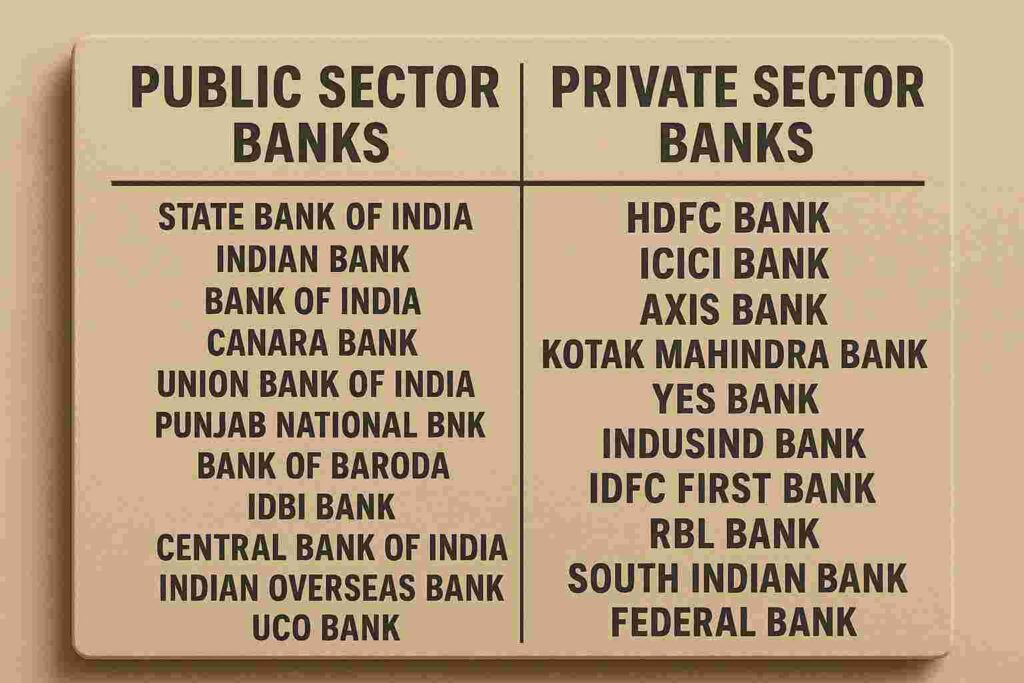
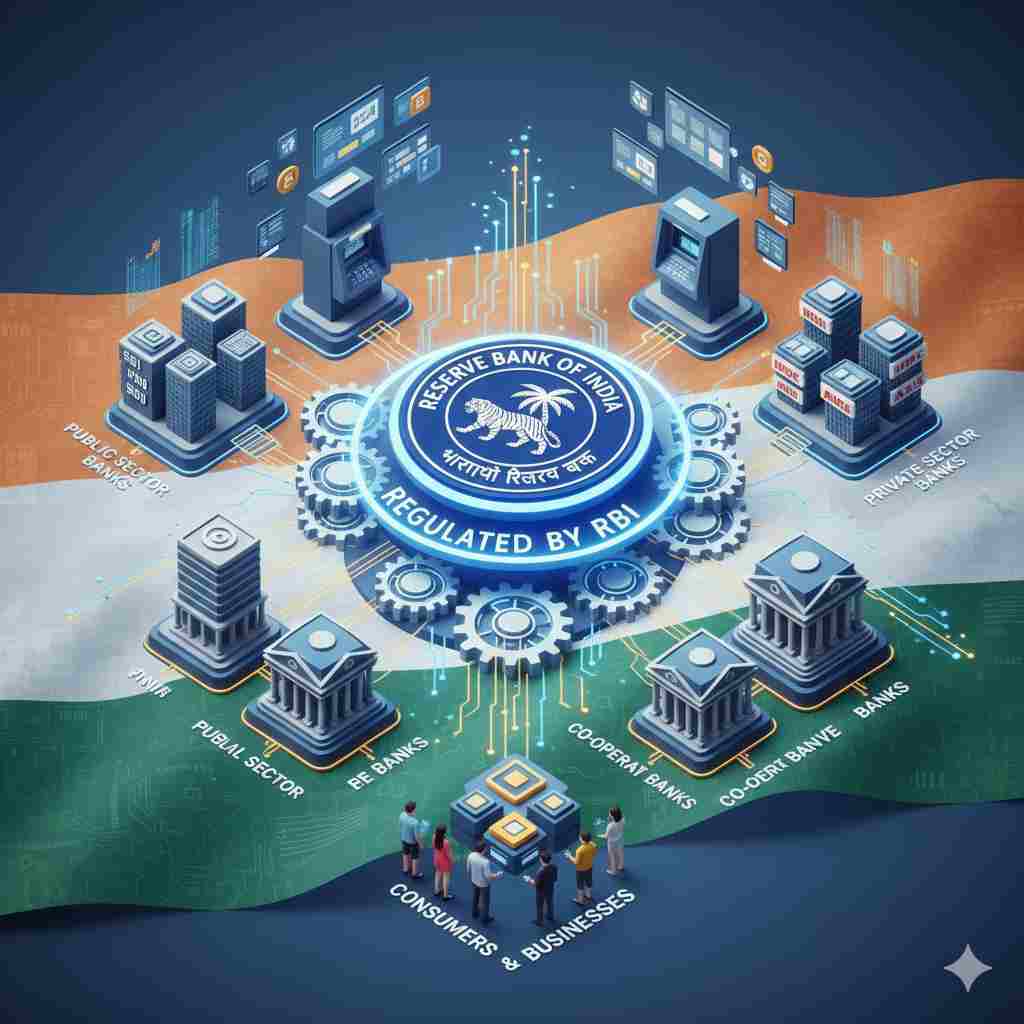
Indian Banking sector has public sector banks like SBI, Bank of Baroda and private sector banks like HDFC bank, ICICI bank. India’s banking system also includes the foreign banks, payments banks and small finance banks, Co-operative banks. RBI is the regulator of the banking system in India.
what is a bank ?🤔
bank is a financial institution which acts as a mediator which accepts money(deposits) from individuals and businessess and then lends(provide loans) that money to others who need it. banks do offer a range of various services (other than taking deposits and giving loans) like maintaining and checking accounts, money transfers, giving bits of financial advice, investment options, etc. banks play a significant role in the financial inclusion process. this system plays a crucial role in the economic stability of a country.
The type of banks is based on different criteria. like ownership is one criterion. Who is the owner of a bank ? >>if government is the owner then it is a public sector bank. If the owner is a private individual or group of individuals then it is a private bank(private sector bank). In this way there are different criteria to decide the type of a bank.
RBI (Reserve Bank of India) regulates banking system of India. RBI is the central bank of India. We will see the classification of banks according to the RBI.
👇
Banking system & the classification of banks
RBI classifies banks in these two categories :
- Scheduled Banks
- Non-scheduled Banks
👇🏻
- 1. 2nd schedule of the RBI Act,1934.
- Schedule means a list of specific things/entries in a law.
- 2nd schedule of RBI Act,1934 is a list of important banks. Scheduled banks are those banks which have their name in this list.
- Scheduled banks include Public Sector Banks, Private Sector Banks and Foreign Banks like Citibank and HSBC, along with Scheduled Small Finance Banks, Regional Rural Banks, and Co-operative Banks. All come under the regulations of the RBI.
- 2. 2nd schedule of the RBI Act,1934 do not have all the banks listed under it. Non-scheduled banks do not have their name in the 2nd schedule of RBI act.
- these banks do not have any mention in that list.
Further, Scheduled Banks are classified as –
- Commercial Banks
- Non-commercial Banks
the main difference between the commercial banks and non-commercial banks. – the commercial banks seek profit through their operations. These are ‘for-profit’ organisations. And non-commercial banks work for social cause and do not seek profits while doing their operations. The non-commercial banks are ‘not-for-profit’ organisations.
⬇️
1. Commercial Banks – 💵🤑
>> Public sector banks(government banks) – State Bank of India(SBI), panjab National Bank(PNB), etc. are public sector banks which work as a commercial banks.
>> Private sector Banks – HDFC ICICI, Axis Banks, etc. are private sector banks.
>> Foreign Banks – banks established in other countries (outside India) are foreign banks. But they operate in India by setting up their branch/office in India. RBI regulates these foreign banks too. Examples- HSBC, Citibank, Bank of America, etc.
>> Regional Rural Banks – these are special purpose banks for the rural areas. These banks are usually owned by Indian government, state government(s) and other commercial banks. RRBs are sponsred by other commercial banks to support the cause. Examples- Maharashtra Gramin Bank, Kerala Gramin Bank, Prathma bank, Karnataka Grameen Bank, etc.
>> Small Finance banks – As name suggests these banks are small in terms of operative capacity. these banks target the underbanked population as their customers. Examples- AU small Finance bank, Suryoday small finance bank, etc.
>> Payments Banks – Banks do not provide loan facilities like other commercial banks do. they accept deposits, provide payment services, remittances services, etc. Main focus is on money transfer services. Examples- India Post payments bank, Airtel Payments bank, etc.
2. Non-commercial Banks- 👨🏻🌾🌾👵🏻
>> Co-operative Banks – The co. op. banks do not have one individual or one entity as the owner. The members of a co.op. bank are its owners as well as its customers.
Here are a few examples of public and private sector banks 👇